
Pilates for Skaters: Balance and Core — The Pilates Advantage for Roller Skaters
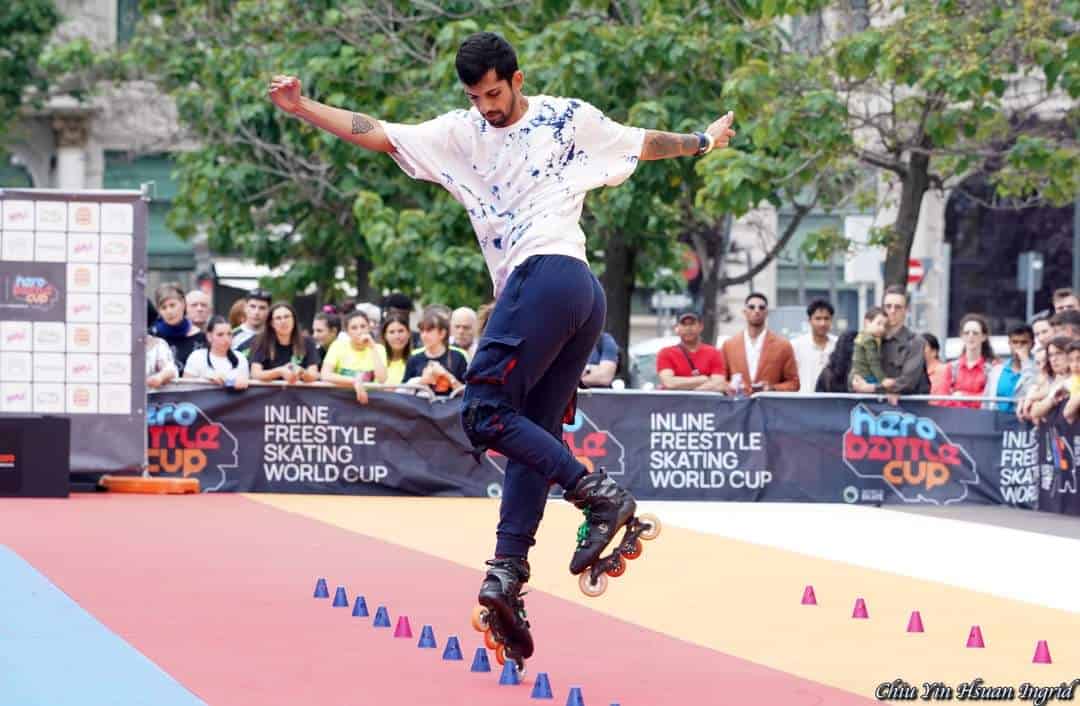
Roller skating may look effortless — but behind every smooth glide, powerful crossover, and controlled turn is a finely tuned system of balance, core endurance, and hip stability. Whether you skate for fitness, dance, speed, derby, or artistic performance, your body depends on three high-level physical skills:
- Proprioception (body awareness)
- Trunk endurance (deep core control)
- Hip stabilizer activation (pelvic and knee protection)
This is where Pilates becomes a game-changer for skaters.
At Moushu’s Pilates, we use exercise physiology-backed Pilates training to help roller skaters improve control, float through movement, and reduce injury risk.
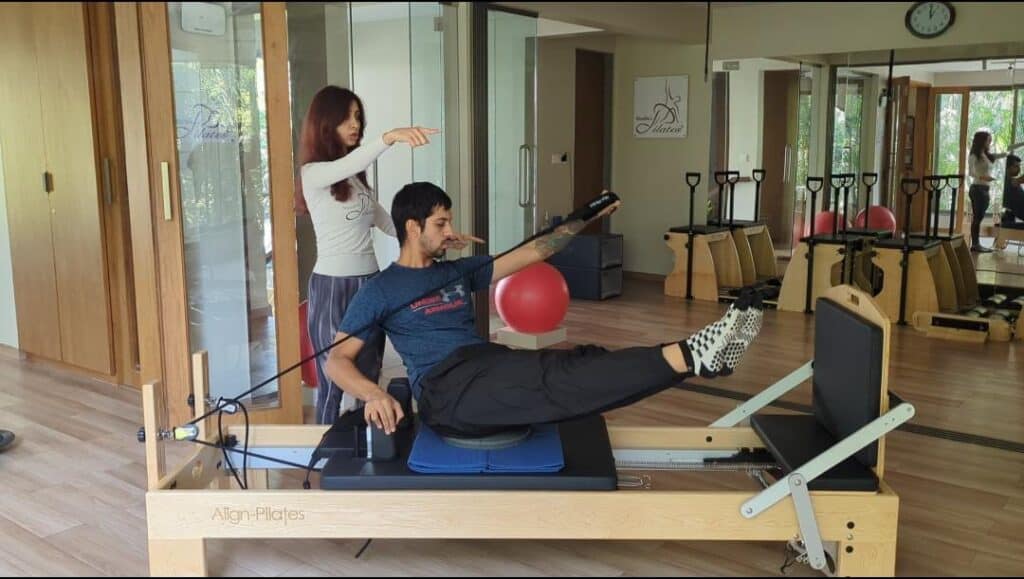
1. Proprioception: Your Body’s Subconscious Balance System on Wheels
Proprioception is your body’s ability to sense where you are in space — to judge its own position, movement or effort in space. On wheels, this becomes one of your primary safety and performance systems. Each movement relies on quick reflexes and an internal feedback loop between your feet, ankles, knees, hips, and brain.
How does Pilates Improve Proprioception for Skaters?
The key to building good proprioception is in creating a proper exercise plan. A plan that allows the client to build skills through practice, connection, correct form and by layering the exercises as building blocks to achieve a goal. We dissect each pilates exercise and make it achievable and functional for our clients so that it can directly replicate skating performance outcomes. Some types of exercises we employ in our programs include:
- Controlled eccentric loading
- Single-leg stability drills
- Unstable surface training
- Precision foot activation
- Slow directional transitions
When programmed well, they usually give you the following improvements:
1. Balance during turns
2. Control during slides
3. Recovery from missteps
4. Confidence at higher speeds
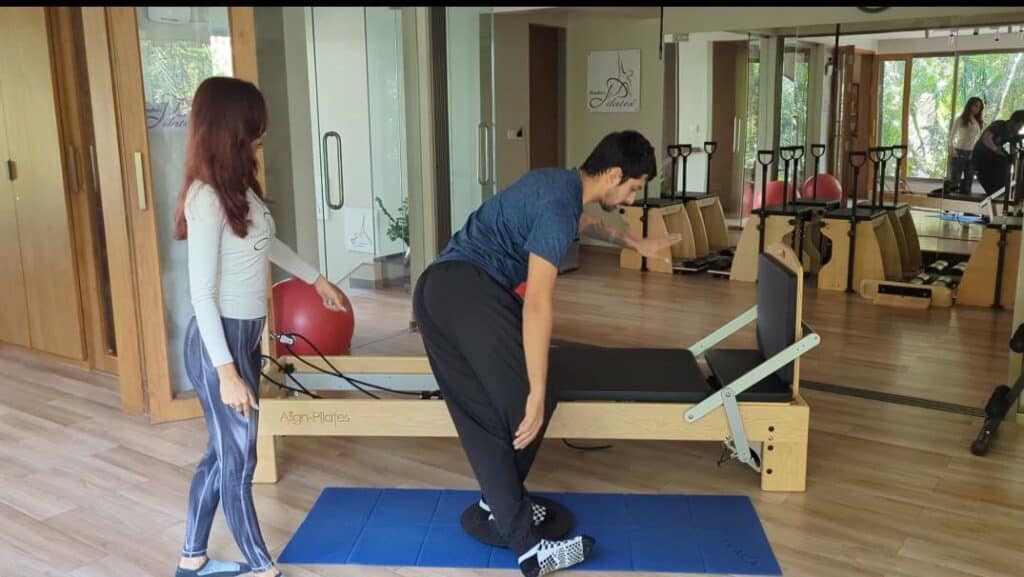
Exercise Physiology Insight:
Instability when used in Pilates stimulates muscle spindle and joint mechanoreceptor activity, enhancing sensory-motor integration and faster postural corrections — crucial for skaters reacting to dynamic surfaces.
2. Trunk Endurance: Cueing the core muscles and engaging them in the right way
Skating doesn’t just demand core strength – it demands efficient core work and endurance. You may skate for 10 mins or 2 hours. The trunk plays a key role in directing movement (rotation) and supporting the body when changing direction. Without it, posture may collapse, knees drift inward and power leaks from your stride due to inefficient movement.
Muscles to engage when doing pilates:
- Transversus abdominis
- Multifidus
- Diaphragm
- Pelvic floor
- Obliques and Anterior Oblique Sling
These can then generate the following benefits:
- longer skating sessions with less fatigue
- better spine control during turns
- stronger push-offs
- smoother flow in dance & jam skating
- fewer lower back flare-ups
Exercise Physiology Insight:
Trunk endurance allows efficient energy transfer between upper and lower limbs, minimizing unnecessary joint strain and maximizing skating force transfer and efficiency.
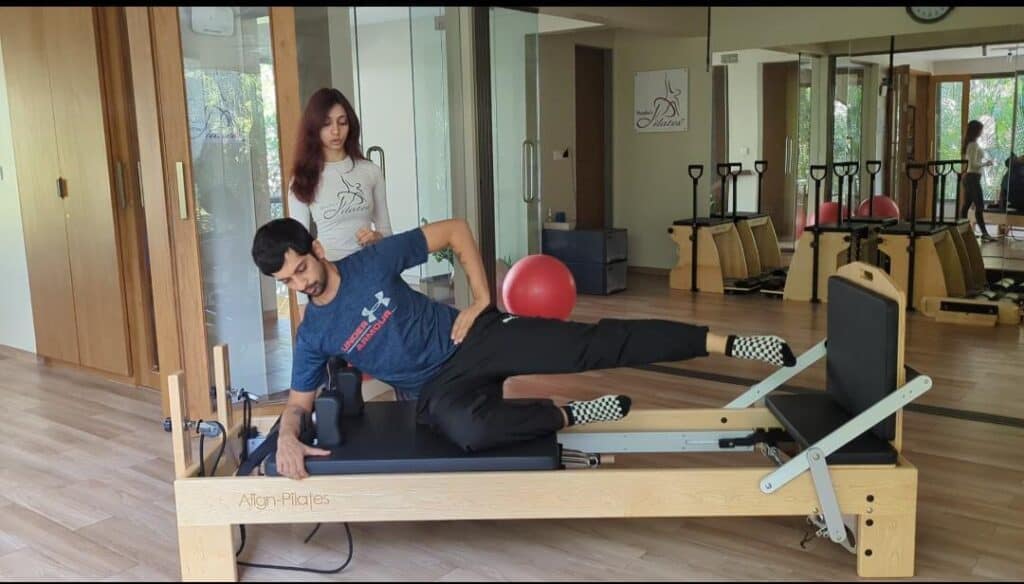
3. Muscle Activation through the Hip: (Combination between Stabilizer and Mobilisers)
The foundation for skaters:
Your hip stabilizers (glutes, deep rotators, piriformis) control pelvic alignment, knee tracking, and ankle stability. Weak activation through the stabilisers and hence, inefficient work through the mobilisers are one of the biggest reasons skaters experience:
❌ knee pain
❌ ankle sprains
❌ IT band irritation
❌ hip impingement
❌ chronic instability
Pilates strengthens hip stability and mobility through:
- Side-lying series
- Standing single-leg stability
- Controlled hip rotation
- Lateral resistance training
- Pelvic dissociation drills
This leads to:
✔ stronger crossovers
✔ safer landings
✔ better edge control
✔ fewer knee collapses
✔ improved power transmissionExercise Physiology Insight:
Strong lateral hip stabilizers prevent dynamic knee valgus, one of the most common mechanisms of skating-related overuse injuries.
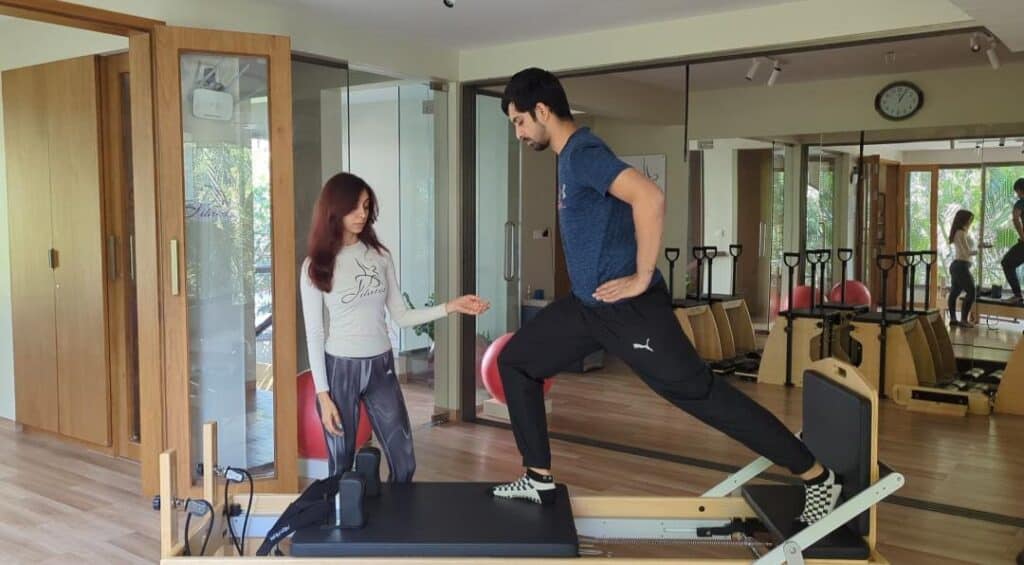
Why Do All Types of Roller Skaters Need Pilates? Hear It Straight From Our Clients Itself!
Arhant Joshi (27 M) – Inline Freestyle Skater: started playing competitively when he was 6 years old. Currently competing at an international level including the ASEAN Championship and Asian Championship Winner.
“Hi, my name is Arhant and I have been an incline skating athlete since 2012. I have been coming to Moshu’s Pilates for the last few years for my general fitness and I have to say it has really helped my classical event. Of late…. as I started increasing my training for speed skating, I developed some knee pain and gradually it kept increasing.
At Moushu’s Pilates, Dr Moushumi Kuvawala then conducted an assessment and identified that the issue stemmed from a misalignment in my knee-to-ankle traction, which created an imbalance and loaded my knee inefficiently. They then used pilates to simulate a lot of my painful skating positions and replicated all the movements I needed on the Pilates equipment. I have to say, it really helped my overall knee pain and increased my strength in the event. So, thank you to the Moushu’s Pilates team and I will definitely be continuing here for a really long time as they have taught me how to up-skill my sports performance and even take care of my overall health.”
🎥 How This Links to Our YouTube Series
If you enjoyed this breakdown, don’t miss our video:
🌟 The Moushu’s Pilates Advantage
At Moushu’s Pilates, our training is:
- APPI-certified
- Exercise physiology-informed
- Athlete-specific
- Joint-safe
- Performance-driven
We don’t just train muscles — we train movement intelligence.
Ready to skate stronger, smoother, and safer?
Explore our athlete-specific Pilates programs, sports conditioning sessions, and APPI instructor training all available on our website.
👉 Visit www.moushuspilates.com to get started.
📚 Research References
- Hrysomallis, C. (2011). Balance ability and athletic performance. Sports Medicine.
- Stanton, R., et al. (2014). Exercise training and proprioception: A systematic review. Journal of Sports Sciences.
- Willardson, J. M. (2007). Core stability and athletic performance. Journal of Strength & Conditioning Research.
- Distefano, L. J., et al. (2009). Gluteal muscle activation during functional exercises. Journal of Athletic Training.
Behm, D. G., et al. (2010). Neuromuscular adaptations to instability training. Sports Medicine.
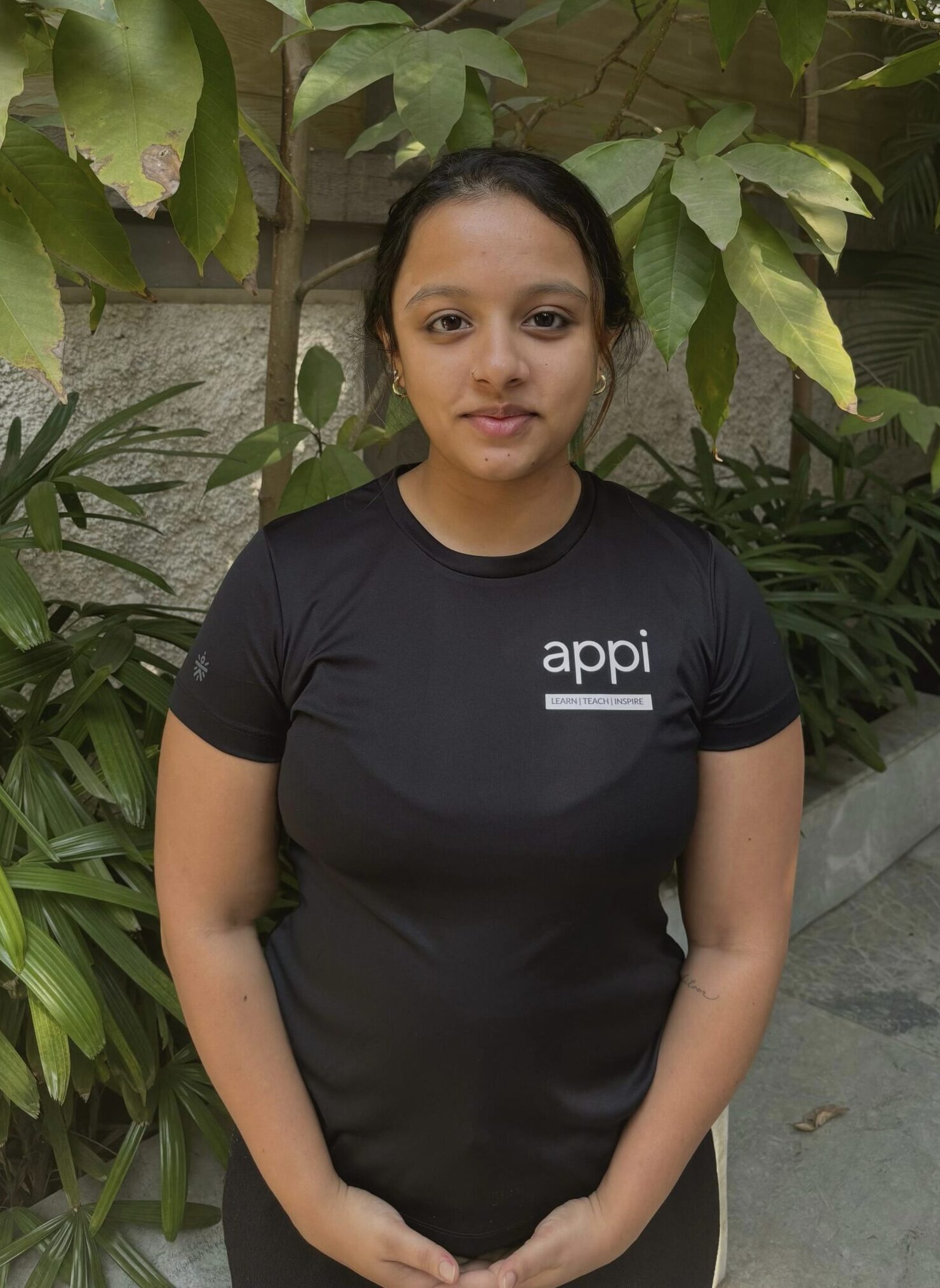
Having graduated from the University of Queensland, she is now a Clinical Exercise Physiologist who’s been practising pilates for 8 years and is a certified Matwork and Equipment instructor from APPI (UK). She specialises in exercise rehab for elite athletes, people with muscle bone injuries, neurological issues like Parkinson’s and women’s health conditions.