
Pilates for Long Rides: Preventing Low Back and Neck Fatigue in Cyclists

Long rides test more than just your legs. Hence, low back tightness, neck fatigue and postural collapse are often huge limiting factors for cyclists. This happens, long before any tiredness or lack of cardio fitness causes the ride to end.
The reason?
Cycling involves a more complicated chain of muscle work and strength than we presume. Especially at a more regular and consistent level.
At Moushu’s Pilates, we see cyclists who are strong, fit, and consistent — yet still struggle with discomfort after 60–90 minutes in the saddle. Pilates addresses this gap by training the right balance between isometric endurance and mobility, something long rides demand.
Understanding the Cyclist’s Problem: Isometric Load Over Time
Unlike running or swimming, cycling requires sustained static holds in the same position.
- Your body stays flexed
- Your neck remains extended
- Your shoulders are held forward
- Your hips will constantly stay in repeated limited-range movements
If you’re not training at the gym or at home in a way that allows you to hold the posture consistently. Over time, it will lead to:
❌ lumbar spine fatigue
❌ neck and upper trapezius tension
❌ shallow breathing
❌ poor force transfer to pedals
This is where Pilates is the perfect method to help you combat these eventualities. Now, here’s how Pilates helps you prevent or treat these issues.
1. Isometric Endurance: The Missing Link in Cycling Training
Isometric endurance is the ability to hold a position under load without movement — what your spine, neck, and shoulders must do on long rides.
Pilates trains isometric endurance through:
- Long planks
- Stability work in all 4s
- Anti-extension & anti-rotation drills
- Scapular-Thoracic stability work
- Deep neck flexor activation & endurance work
Benefits for Cyclists:
✔ delayed onset of low back fatigue
✔ reduced neck strain on long rides
✔ improved posture under fatigue
✔ reduced pain around joints ie: reduced pain above the knee
✔ better power transfer to pedals
🧠 Exercise Physiology Insight:
Low-load, long-duration isometric training improves type I muscle fiber endurance, ideal for cycling posture demands. Pilates offers low load training when implemented in the right way.
2. Mobility: Preventing Overuse and Postural Locking
While cyclists need endurance, mobility is equally important. Without it, isometric holds can cause rigidity and cause stiffness.
Key mobility areas for cyclists:
- Thoracic spine extension & rotation
- Hip flexor tightness
- Hamstring mobility and stretch
- Cervical (neck) spine movement
- Rib cage expansion when breathing
Does that sound familiar? Well they are some common Pilates benefits, achieved through:
- Segmental Spinal Articulation
- Controlled Thoracic Movements
- Deep Core Muscle Recruitment
- Hip Dissociation Drills
🧠 Exercise Physiology Insight:
Cyclists with restricted thoracic mobility can have increased loading through parts of the spine that aren’t trained to handle the load. Eventually, leading to neck/back pain and fatigue.
Isometric Endurance vs Mobility: Cyclists Need Both
| Too Much Endurance, No Mobility | Too Much Mobility, No Endurance |
| Stiff spine | Postural collapse |
| Neck strain | Energy leaks/Poor Control |
| Low back compression | Poor force transfer |
| Shallow breathing | Early fatigue |
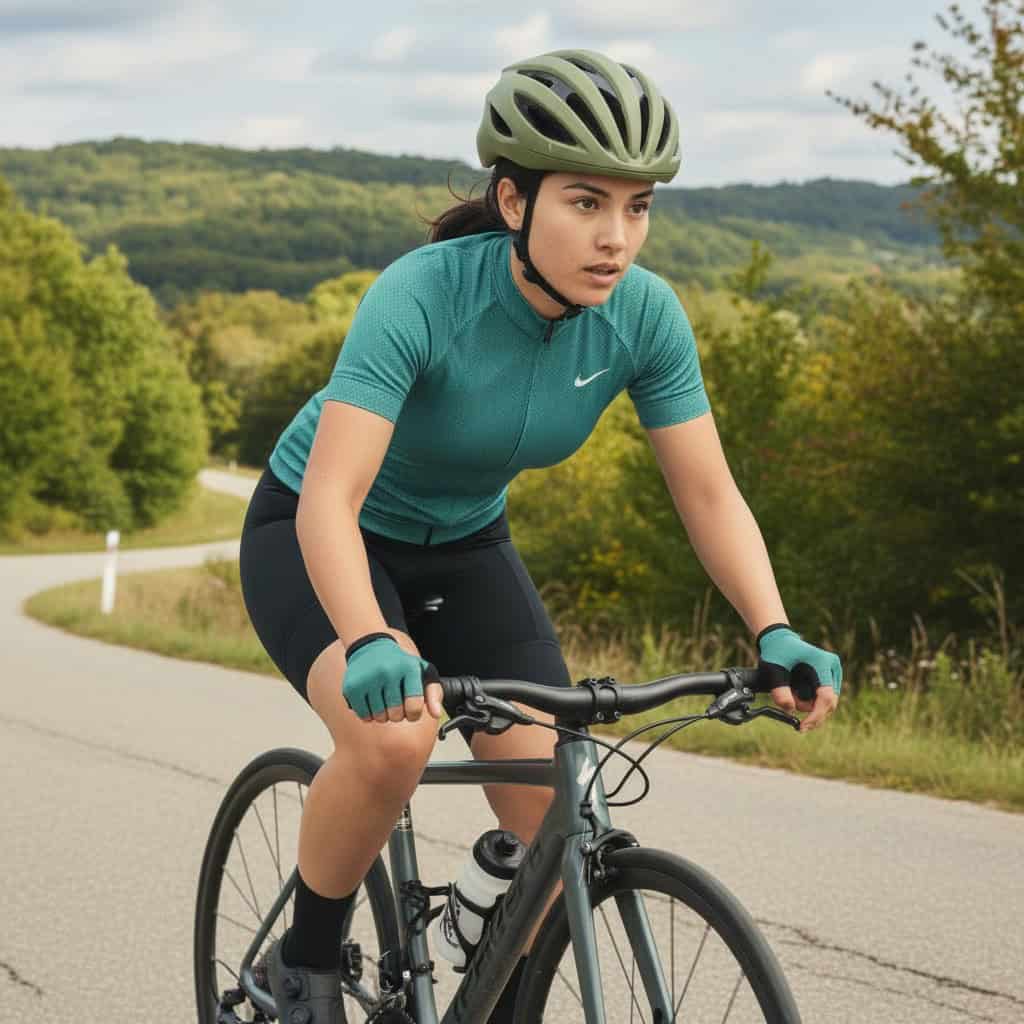
Pilates balances both — training cyclists to hold strong positions while maintaining freedom of movement.
How Pilates Complements Your Cycling Training
Pilates does NOT replace:
- Strength training
- Interval work
- Long rides
But it supports them by:
✔ improving riding posture
✔ delaying fatigue
✔ protecting the spine
✔ enhancing breathing efficiency
✔ improving comfort on long rides
Many cyclists report feeling “lighter,” “more supported,” and “less stiff” within 4–6 weeks of consistent Pilates training.
The Moushu’s Pilates Advantage for Cyclists
At Moushu’s Pilates, we specialise in athlete-specific Pilates, grounded in science. The exercise physiology and biomechanics of a cyclist are focused on by tailoring a program for each of your cycling needs.
Our cycling-focused sessions target:
- Trunk endurance
- Neck and scapular stability
- Spinal mobility
- Breathing efficiency
- Postural control under fatigue
More Importantly, the classes are conducted by instructors who are trained by physiotherapists and qualified movement specialists so you know you are getting a high-quality workout in.
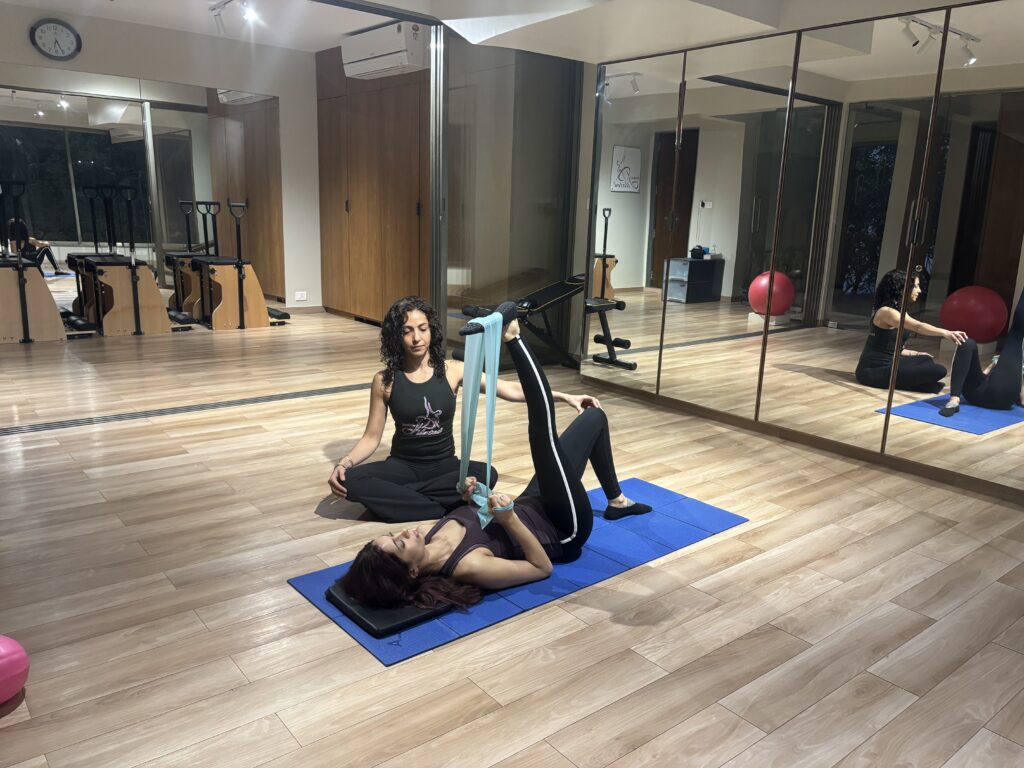
So to ride longer, stay stronger and finish pain-free. Explore our Pilates programs for Cyclists, Athlete conditioning sessions, and APPI-certified training on our website.
👉 Visit www.moushuspilates.com to book your session and learn more.
Research References
- McGill, S. M. (2001). Low back stability: From formal description to issues for performance and rehabilitation. Exercise and Sport Sciences Reviews.
- Burnett, A. F., et al. (2004). Spine and hip movement during cycling: Implications for low back pain. Clinical Biomechanics.
- Abt, J. P., et al. (2007). Core stability and cycling performance. Journal of Strength and Conditioning Research.
- Kibler, W. B., et al. (2006). The role of core stability in athletic function. Sports Medicine.
Behm, D. G., et al. (2010). Neuromuscular adaptations to instability training. Sports Medicine.

Having graduated from the University of Queensland, she is now a Clinical Exercise Physiologist who’s been practising pilates for 8 years and is a certified Matwork and Equipment instructor from APPI (UK). She specialises in exercise rehab for elite athletes, people with muscle bone injuries, neurological issues like Parkinson’s and women’s health conditions.